June 5, 2026

Top 10 Universities in France for International Students 2026

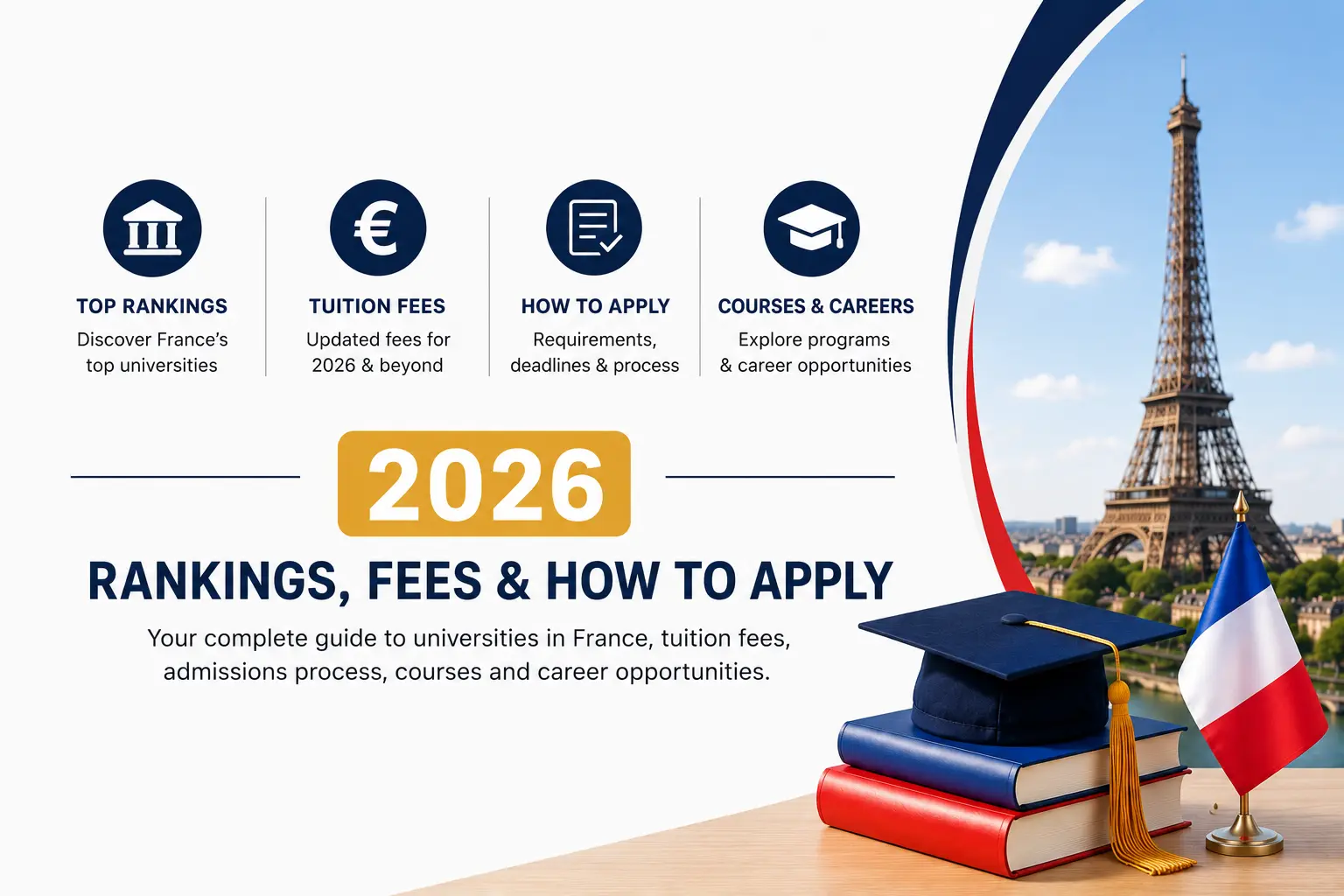
Best universities in France 2026: QS rankings, tuition fees for public & private unis, the new non-EU fee rules, admission tips by field. The full guide.

Top 10 French Universities for International Students in 2026 And How to Get In 

(QS Rankings, Public vs Private Fees, the New 2026 Fee Law & Field-by-Field Admission Guide) 

France is the third most popular destination for international students worldwide, hosting over 400,000 international students each year. Four French universities sit in the global QS Top 100, the Grandes Ecoles produce some of the world's most employable graduates, and the cost of education has historically been among the most affordable anywhere, even for non-EU students. 

That last point just changed. In April 2026, France's Higher Education Minister Philippe Baptiste announced that differentiated (higher) tuition fees for non-EU students at public universities are now mandatory from the 2026/27 academic year, ending the system where most universities voluntarily waived the higher rate. This guide gives you the full picture: rankings, honest fees for both public and private institutions, who is exempt, and how to find the right university for your field and budget. 

Category Details
French Universities in QS Top 100 4 institutions
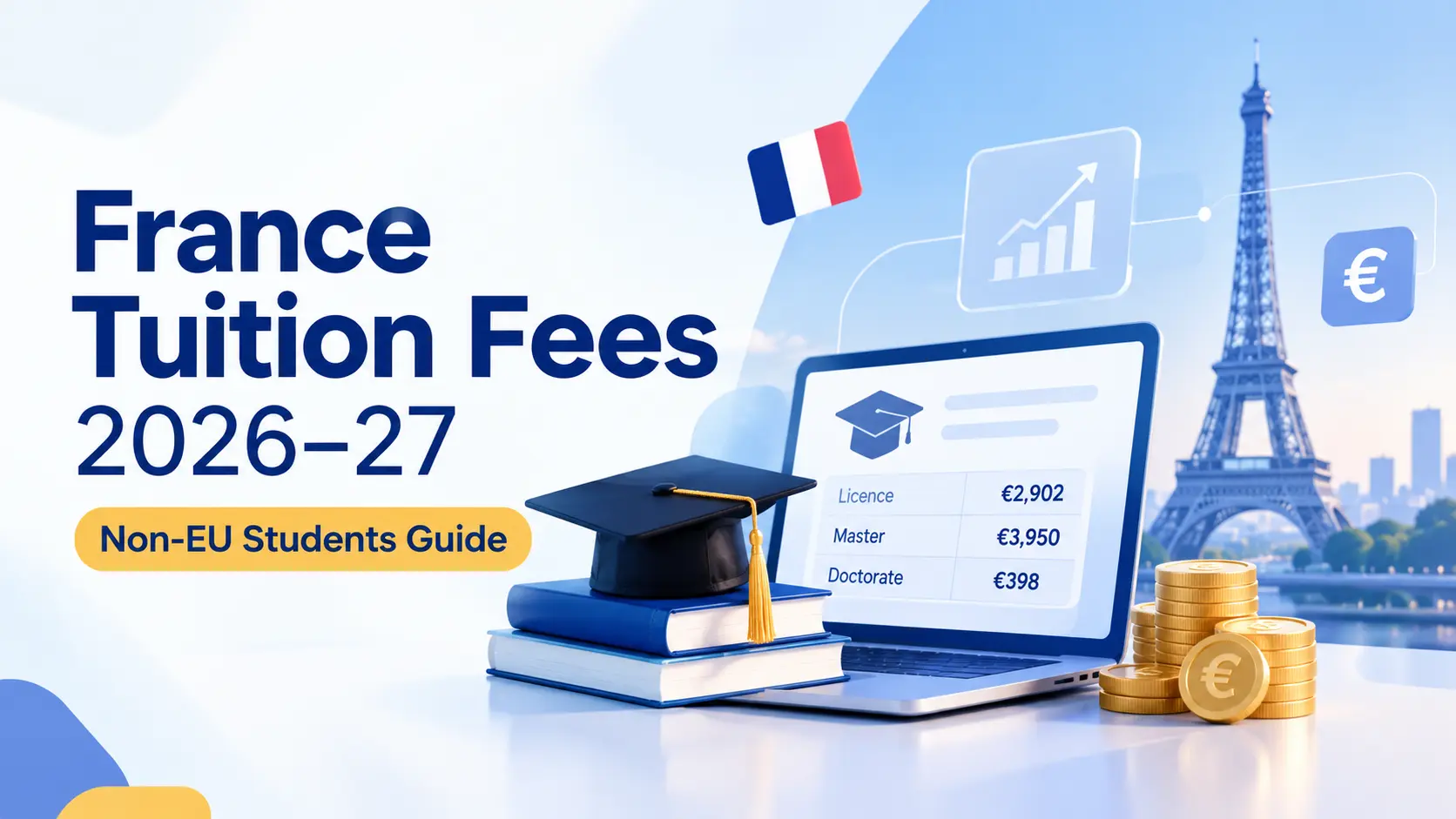
Non-EU Public Undergraduate Fee (2026/27) €2,895 per year
Non-EU Public Master's Fee €3,941 per year
English-Taught Programmes Available 1,600+ programmes across France
* New mandatory tuition fee rules were confirmed in April 2026 by French Higher Education Minister Philippe Baptiste and apply to new non-EU students entering from September 2026. Doctoral (PhD) tuition remains €397 per year for all students. See Section 5 for details.

1. How France's University System Works 

France operates two parallel higher education tracks and understanding the difference is critical before you start applying.

Universités: France's 70+ public research universities. Open to any student holding the baccalauréat (or equivalent). Government-funded, regulated tuition, large student bodies, strong research output. These are the institutions affected by the new 2026 fee rules. 

Grandes Ecoles: around 250 elite professional schools for business, engineering, and political science. Highly selective, smaller cohorts, admission by competitive exam (concours) or rigorous application. Some are public backed with low fees (École Polytechnique); others are private with MBA-style tuition (HEC Paris, INSEAD). The new non-EU fee rules do not apply to purely private Grandes Ecoles, they set their own fees.

Dimensions France Tip 

Don't select a university by overall QS rank alone. A public university ranked #200 overall may be world #2 in your specific field. Always check QS Subject Rankings alongside the main table, they often tell a completely different story, especially for maths, medicine, political science, and arts.

2. Top 10 French Universities for International Students 2026 

Our picks combine QS World University Rankings 2026 (published June 2025), Financial Times MBA Rankings 2026, employer reputation data, English programme availability, and international student experience.

# University / Institution QS 2026 Rank Best Known For Instruction Language
1 Université PSL (Paris Sciences & Lettres) #28 Globally
#1 in France
Research, Sciences, Arts, Medicine, Law English + French
2 Institut Polytechnique de Paris (IP Paris / École Polytechnique) #41 Globally
#2 in France
Engineering, Physics, Mathematics, Defence, AI English + French
3 Université Paris-Saclay #70 Globally
#3 in France
Engineering, Mathematics, Life Sciences English + French
4 Sorbonne Université #72 Globally
#4 in France
Humanities, Medicine, Natural Sciences English + French
5 HEC Paris #6 FT MBA 2026
#5 QS MBA 2026
Business, Finance, MBA, Consulting Mainly English
6 Sciences Po Paris #2 Worldwide (Politics)
#367 Overall QS
Political Science, International Relations, Public Policy, Law English + French
7 INSEAD #1 FT MBA 2025 MBA, Executive Education, Entrepreneurship English Only
8 ESSEC Business School Top 10 in Europe Finance, Luxury Management, Hospitality English + French
9 CentraleSupélec (Paris-Saclay) Top 200 Globally Engineering, Data Science, Energy English + French
10 Université Grenoble Alpes Top 250 Globally Engineering, Alpine Research, Sciences English + French

A Note on Rankings for Business Schools 

HEC Paris and INSEAD are specialist business schools and appear in MBA/management rankings rather than general world university tables. HEC Paris ranked #6 globally in the Financial Times Global MBA Ranking 2026 (up 3 places) and #5 in the QS Global MBA Ranking 2026. INSEAD held the #1 Financial Times MBA position in 2025. Sciences Po's #367 overall QS rank reflects the general table, it ranks #2 in the world for Politics & International Studies in the QS Subject Rankings 2026.

3. Best Universities by Field 

Overall rankings are a starting point. Here's where French institutions genuinely lead globally, broken down by academic discipline: 

Field Top Pick Runner-Up Why It Leads
Business / MBA HEC Paris
#5 QS MBA Global • #6 FT MBA 2026
INSEAD, ESSEC, ESCP Strong alumni network across CAC 40 companies, McKinsey, Goldman Sachs and global consulting firms. Around 95% international student population.
Engineering & Technology IP Paris / École Polytechnique
#41 QS Global • #25 Employer Reputation
CentraleSupélec, INSA Lyon Exceptional reputation in mathematics, physics, defence engineering, AI and quantitative sciences.
Political Science & International Relations Sciences Po Paris
#2 Worldwide for Politics
Paris 1 Panthéon-Sorbonne Alumni include French presidents, senior EU leaders, diplomats and global policymakers.
Medicine & Life Sciences Sorbonne Université / Université Paris Cité Université Paris-Saclay Leading clinical research output, major university hospitals (CHU), and strong international research partnerships.
Arts & Humanities Sorbonne Université / PSL Paris 1 Panthéon-Sorbonne
#17 Arts & Humanities QS
Historic academic reputation combined with unparalleled access to Parisian cultural institutions.
Natural Sciences & Mathematics Université Paris-Saclay PSL / ENS Paris Mathematics ranked among the world's best; one of France's strongest scientific research ecosystems.
Entrepreneurship EM Lyon Business School ESCP, EDHEC Recognised for entrepreneurship education, startup incubation and strong industry connections.
Architecture & Design École Nationale Supérieure d'Architecture Paris-Malaquais ENSAD, Bellecour Government-accredited programmes, prestigious Paris studio culture and highly selective admissions.

4. Admission Requirements: How to Get In 

Getting into a French university as an international student requires understanding the right application route, preparing the right documents, and for Grandes Ecoles, demonstrating purpose and professional clarity in interviews. Here's a realistic breakdown by institution type:

Route / Institution Type Typical Requirements Acceptance Rate Application Portal
Public University – Licence (Bachelor's) Baccalauréat or equivalent qualification, French B2 (or English proficiency for English-taught programmes), motivation letter. 30–70% Parcoursup (EU students)
Études en France (Non-EU students)
Public University – Master's Relevant Bachelor's degree, language certificate, CV, motivation letter, and academic transcripts. 20–50% Mon Master Portal
Campus France
Grande École – Business
(HEC, ESSEC, ESCP, EDHEC, EM Lyon)
Bachelor's degree, GMAT/GRE scores, IELTS 6.5+ or TOEFL 90+, motivation letter, and interview. 7–25% Direct Application to Institution
Grande École – Engineering
(IP Paris, CentraleSupélec, Mines)
Strong mathematics and physics background, competitive entrance examination (concours) or international admission pathway. 5–15% Direct Concours / International Track
Parcoursup (Post-Bac)
Sciences Po Paris – Bachelor's Secondary school qualification, written assessment, interview, and strong overall academic profile. ~13.5% Direct Online Application
Sciences Po Paris – Master's Bachelor's degree, statement of purpose, 2–3 recommendation letters, and language proficiency proof. ~25% Direct Online Application
INSEAD MBA Bachelor's degree, GMAT (700+ typical), 3–5 years of professional experience, and demonstrated English proficiency. ~30% Direct Application to INSEAD

Documents almost every institution requires: 

Academic transcripts: all secondary and university results, certified and translated into French or English. 

Motivation letter (lettre de motivation): 1–2 pages. Why this programme, why France, what are your career goals. Underrated and critical. 

Letters of recommendation: 2–3 academic or professional referees. Essential for Master's and MBA applications. 

Language proof: DELF/TCF B2 for French medium programmes; IELTS 6.5+ or TOEFL 90+ for English medium. 

CV / résumé: European format preferred (Europass acceptable). Maximum 1 page for UG, 2 pages for Master's/MBA. 

Valid passport copy: valid for the full duration of your studies. 

Application fee: most institutions charge €50–€150. Sciences Po charges €150. INSEAD significantly more. 

Dimensions France Tip 

Apply 6–9 months before your intended start date. Most French universities open applications between October and January for a September intake. Grandes Ecoles deadlines vary, some close as early as November. A strong motivation letter can compensate for a slightly lower GPA. It is the single most underrated part of your dossier, treat it as carefully as any exam.

5. Tuition Fees: Public vs Private: The Full 2026 Breakdown 

This section contains the most important update of this entire guide. If you are planning to start in France from September 2026, read this carefully. 

a. The New Non-EU Fee Rules at Public Universities 

Since 2019, French public universities have been encouraged but not obliged to charge non-EU students higher 'differentiated' tuition fees. In practice, the vast majority of institutions chose to waive the higher rate and charge all students the same heavily subsidised domestic fee €178/year for a Bachelor's. 

On 21 April 2026, Higher Education Minister Philippe Baptiste announced the end of that discretion. His words in Le Parisien were unambiguous: "Differentiated fees are now the rule, exemption is the exception." From September 2026, all new non-EU students at public universities will pay the differentiated rate. The fees are approximately 16 times higher than what most students were paying before. 

Level EU / EEA / Swiss Students Non-EU Students (Up to 2025/26 – With Waiver) Non-EU Students (2026/27 – New Mandatory Fees) PhD (All Nationalities)
Licence (Bachelor's / Undergraduate) €178 / year €178 / year (most universities waived the differential fee) €2,895 / year
Approx. 16× increase
N/A
Master's / Postgraduate €254 / year €254 / year (most universities waived the differential fee) €3,941 / year
Mandatory from 2026/27
N/A
Doctorate / PhD €397 / year €397 / year €397 / year
Excluded from new fee rules
€397 / year
Engineering Programmes (MESRI Scope) €178 / year or institution-specific rate Variable by institution €3,941 / year
Generally aligned with Master's fees
N/A
* From the 2026/27 academic year, new non-EU students entering French public higher education institutions are subject to mandatory international tuition fees. Doctoral (PhD) programmes remain exempt and continue to be charged at €397 per year regardless of nationality.

Who Is Affected and Who Is Exempt 

Affected: All new non-EU students enrolling in a Bachelor's, Master's, or engineering programme at a public French university (within MESRI scope) from September 2026. 

NOT affected (continue at old rates): Current non-EU students already enrolled in 2025/26, they are protected for the remainder of their current degree level. PhD students of any nationality, doctoral fees remain €397/year for everyone. 

Exemptions (limited to max. 10% of students): French government scholarship (BGF) holders; students enrolled under a bilateral agreement that explicitly provides exemption; students already exempted in 2025/26 continuing the same programme at the same institution; asylum seekers and stateless persons (some universities have added this locally). 

Scholarship priority: 60% of new scholarships and exemptions are reserved for priority disciplines: AI, digital technology, health, quantum science, biotechnology, environment, energy, and space. If your field aligns, apply for scholarships immediately.

Is France Still Affordable After the Change? 

Yes, even at the new non-EU rates, France is significantly cheaper than the UK (£9,250–£38,000/yr for international students), the US ($30,000–$60,000+/yr), or Australia ($20,000–$45,000 AUD/yr). The French state still covers approximately two-thirds of the real cost of education for every student. Combined with CAF housing aid (up to €250/month), CROUS accommodation, and the right to work up to 964 hours/year, France's cost-to-quality ratio remains one of the world's best.

b. Private University & Grandes Ecoles Fees 

Private institutions and business oriented Grandes Ecoles set their own fees independently of the government, the new non-EU rules do not apply to them. These institutions often offer substantial scholarships, so the headline figure is rarely what most students pay.

Institution Programme Annual Fee (2026) Notes
HEC Paris Full MBA €92,000 Total
(~€46,000/year)
~7% acceptance rate; FT MBA #6 globally (2026).
HEC Paris Master in Management (MiM) €43,500 Total
(~€14,500/year)
QS Top 5 MiM globally; highly international student body.
INSEAD Full MBA ~€107,000 Total FT MBA #1 globally; English-only programme based in Fontainebleau.
Sciences Po Paris Master's Programmes €20,640/year Flat non-EU tuition rate; undergraduate non-EU fees from €14,900/year.
ESSEC Business School Master in Management €38,000–€44,000 Total Triple-accredited; renowned for finance and luxury management.
ESCP Business School Master in Management €37,000 Total Founded in 1819; Europe's oldest business school with 6 campuses.
EDHEC Business School Master's Programmes €16,000–€20,000/year Strong international reputation in finance; campuses in Lille and Nice.
EM Lyon Business School Master's Programmes €15,500–€19,500/year Known for entrepreneurship and innovation; campuses in Lyon, Paris and Shanghai.
École Polytechnique (IP Paris) International Master's Programmes ~€17,000/year Elite engineering institution with strong research and industry links.
CentraleSupélec Engineering / Master's Degree ~€3,941/year (Non-EU) Public-backed institution subject to the new non-EU tuition framework.
American University of Paris Bachelor's & Master's Programmes €18,000–€26,000/year Private American-style university; English-only instruction.
SKEMA Business School Master's Programmes €12,000–€18,000/year Triple-accredited business school with campuses in Paris and Sophia Antipolis.

On Scholarships at Private Institutions 

Most private Grandes Ecoles and business schools offer merit-based scholarships that can reduce tuition by 15–50%. HEC Paris, ESSEC, Sciences Po, and INSEAD all have dedicated international student scholarship programmes. Apply for these at the same time as your main application,  not afterwards. Some have earlier deadlines than general admissions.

6. Campus Life and the International Student Experience 

France's universities are genuinely international. At Sciences Po, over 50% of students come from outside France. HEC Paris draws from 90+ countries with 95% international enrolment in its MBA. Even large public universities like Sorbonne and Paris-Saclay have vibrant international communities and well-resourced international offices. 

Student associations (BDEs and clubs): every French university has student-run clubs for sports, culture, entrepreneurship, and social causes. Joining one in week one is the fastest way to build a French social circle. 

CROUS subsidised restaurants (RU): hot meals from €3.30 with a student card. Open to all enrolled students. One of France's most underrated student benefits. 

International offices (BRI): orientation weeks, buddy programmes pairing new international students with local students, and regular cultural events. 

SUAPS sport facilities: free or near-free access to sports across 50+ disciplines at public universities. 

Mental health support (SUMPPS): all public universities provide free, confidential access to mental health professionals.

Paris vs. regional campuses: Paris offers unmatched networking and culture; Lyon, Toulouse, Bordeaux, and Grenoble offer lower costs (30–40% cheaper), smaller communities, and more French practice, often preferred by students who want to integrate deeply. 

7. How to Choose the Right University for Your Goals 

The hardest question is rarely 'Can I get in?',it's 'Which one is actually right for me?' Use this framework as your starting point: 

Your Goal Best Fit Why
World-Class Research + Lowest Fees PSL, Paris-Saclay, Sorbonne Université QS Top 100 institutions with strong research output and comparatively affordable public tuition fees.
Global MBA + Elite Employer Network HEC Paris, INSEAD, ESSEC Consistently ranked among the world's best business schools with exceptional consulting, finance, and leadership networks.
Engineering, AI or Deep-Tech Career IP Paris / École Polytechnique, CentraleSupélec Outstanding employer reputation and strong links to defence, AI, data science, quantum technology, and research.
Diplomacy, Public Policy & International Organisations Sciences Po Paris Globally recognised for political science, international relations, public policy, and government leadership.
Medicine & Life Sciences Research Sorbonne Université, Université Paris Cité Leading clinical research institutions with extensive hospital and healthcare partnerships.
English-Medium Studies (No French Required) HEC Paris MBA, INSEAD, ESSEC Master's, Sorbonne English-Taught Tracks Fully or primarily English-taught programmes with no French language requirement for admission.
Lowest Cost + Strong Degree Value Public Universities in Lyon, Toulouse, Bordeaux & Grenoble Lower living costs than Paris while maintaining strong academic quality and employment prospects.
Entrepreneurship & Startups EM Lyon, ESCP, EDHEC Excellent entrepreneurship ecosystems, startup incubators, and business creation support.
Arts, Design & Architecture ENSAD, Bellecour École, Paris College of Art Strong creative programmes, industry connections, and access to France's leading cultural environment.

Final Thoughts 

France's university system even after the April 2026 fee changes remains one of the world's most compelling destinations for international students. Four universities in the global QS Top 100, world-leading business and engineering schools, over 1,600 English-taught programmes, and a country that actively wants 500,000 international students by 2027. 

If you are a new non-EU applicant for September 2026 entry: budget for the new public university fees (€2,895 Bachelor's / €3,941 Master's), apply for scholarships early especially if your field aligns with the priority sectors and remember that PhD fees remain unchanged for everyone. The right French university isn't the highest-ranked one. It's the one that fits your goals, your finances, and the life you want to build.

Not Sure Which French University Is Right for You?

Choosing a university in France is about more than rankings. The right choice depends on your academic background, career goals, budget, preferred city, and language level.

Dimensions France helps international students identify the universities and programmes that best match their profile, then supports them through the complete application process—from university selection and document preparation to admissions guidance and visa support.

Students from over 25 countries worldwide have trusted Dimensions France with their study abroad journey.

Contact Dimensions France